
Get a Free Episode,
Delivered to Your Inbox
Tune in to this free episode featuring acclaimed author David Shields
In How to Write Literary Collage, bestselling author David Shields shows you how fragmentation, contradiction, and juxtaposition can reveal emotional truth with extraordinary power.
You’ll learn how to shape disparate materials into a work that resonates—how to create momentum without plot, coherence without linearity, and meaning from the chaos of lived experience. Whether you’re writing memoir, essays, experimental fiction, or hybrid prose, this course gives you a practical, inspiring framework for creating bold, original work.
WHAT YOU’LL LEARN:
- How to turn fragments into narrative energy—the core principles of juxtaposition, contrast, pacing, and patterning that make collage feel alive.
- Ways to use personal material ethically and artfully, transforming memory, research, and found text into meaningful artistic structure.
- How to create emotional coherence without linear plot, using voice, repetition, association, and thematic architecture.
- Strategies for shaping a long work from short pieces, including sequencing, modular construction, and sustaining momentum across a book-length project.
- How to develop your own collage aesthetic, embracing experimentation while building a clear, distinctive, and compelling authorial voice.
Why Your Collage Isn’t Coming Together (Yet)
-
Your fragments feel promising… but shapeless. You have pieces you love, but no idea how they’re supposed to fit together.
-
You fear the work is “not a real book.” Without a traditional plot or structure, it’s easy to doubt the legitimacy of what you’re making.
-
You keep rewriting the same small pieces instead of building a whole. The project feels stuck in place rather than growing into something larger.
-
You don’t know how much of yourself—or others—to include. Using real experience, research, or borrowed material feels ethically confusing and artistically uncertain.
-
You worry readers won’t understand what you’re trying to do. You want your collage to feel intentional and resonant, not chaotic or self-indulgent.

Transform Your Fragments Into a Stunning Collage
-
Build a clear, repeatable method for structuring a collage so it feels purposeful—not chaotic or arbitrary.
-
Develop a deeper artistic vision, so you can choose the right fragments, textures, and voices to serve your themes.
-
Learn practical editorial strategies for sequencing, shaping, and refining pieces until they form a unified whole.
-
Gain the confidence to break rules intentionally, drawing on Shields’s radical, genre-defying approach.
-
Arrive at a finished roadmap for your project, allowing you to move forward with momentum rather than uncertainty.
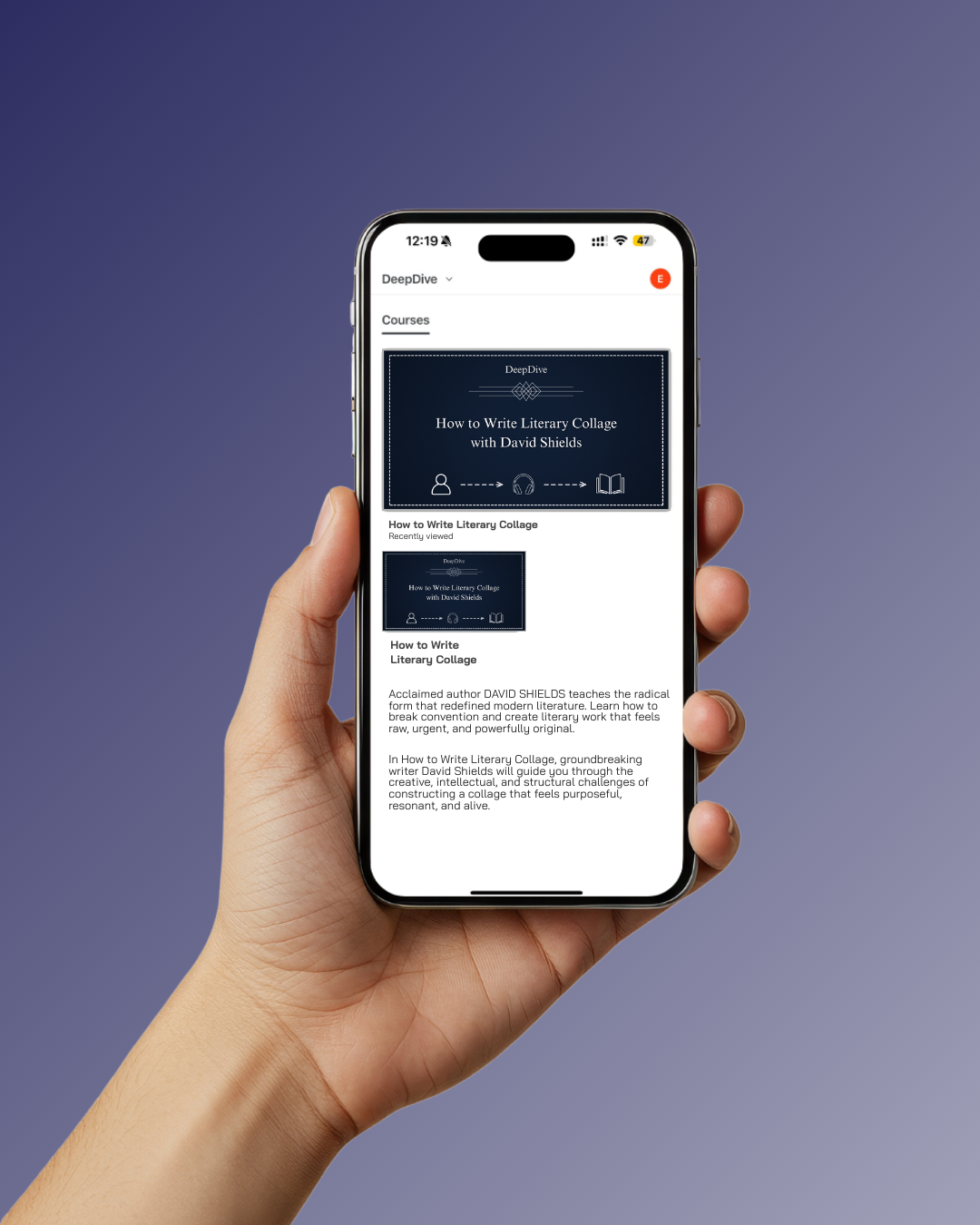
Ready to transform disparate literary fragments into a powerful, unified work of art?
In How to Write Literary Collage, groundbreaking writer David Shields will guide you through the creative, intellectual, and structural challenges of constructing a collage that feels purposeful, resonant, and alive.
You’ll learn how to:
-
Gather and select material that carries emotional, thematic, and intellectual voltage
-
Shape fragments into a compelling sequence that creates momentum and meaning
-
Develop a voice and sensibility that unifies disparate pieces into a cohesive whole
-
Understand the aesthetics and ethics of borrowing, remixing, and recontextualizing text
-
Revise your collage so it moves with clarity, tension, and emotional impact
This course offers a clear, practical, and deeply inspiring roadmap to writing collage that is cohesive, seductive, and artistically compelling. Learn the mindset, structure, and techniques that contemporary masters of collage use to create work that feels both intimate and propulsive.
ENROLL NOWGet the DeepDive app.
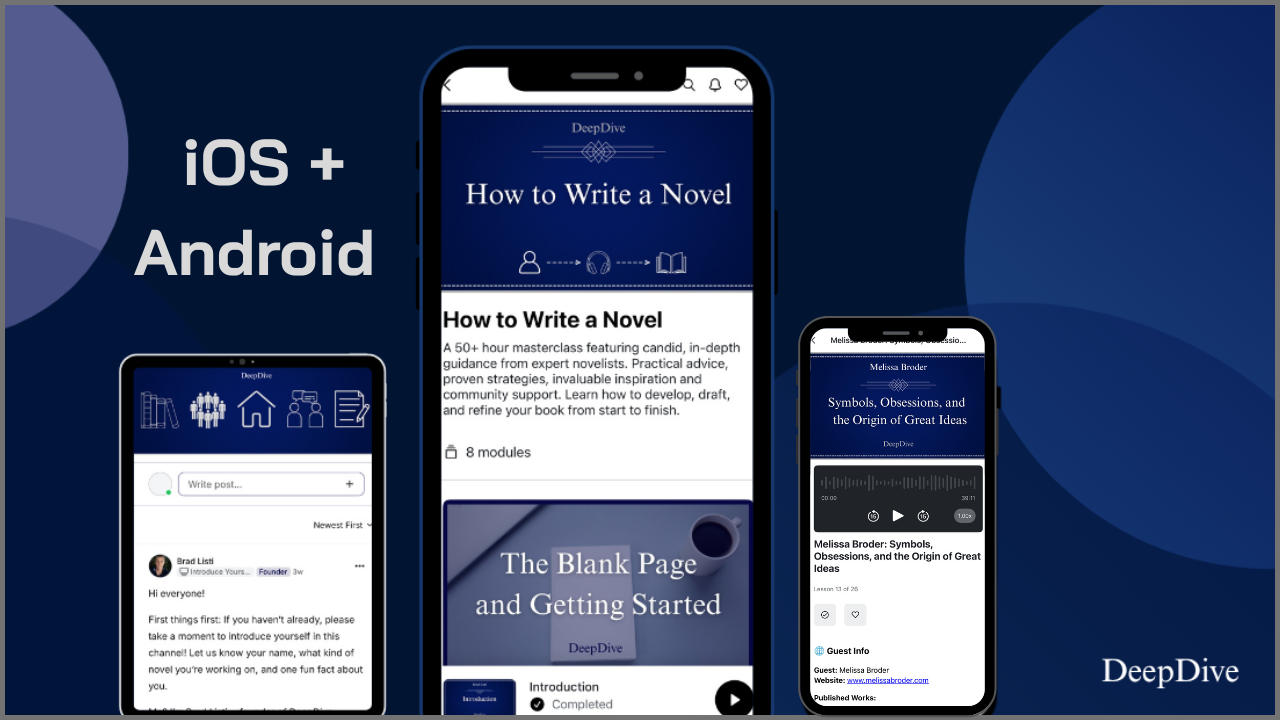
Learn anywhere, at your own speed, on your own time. Access immersive audio courses, bonus content, and community features on your iPhone or Android—so you can learn on your schedule, wherever you are.
Meet Your Instructor
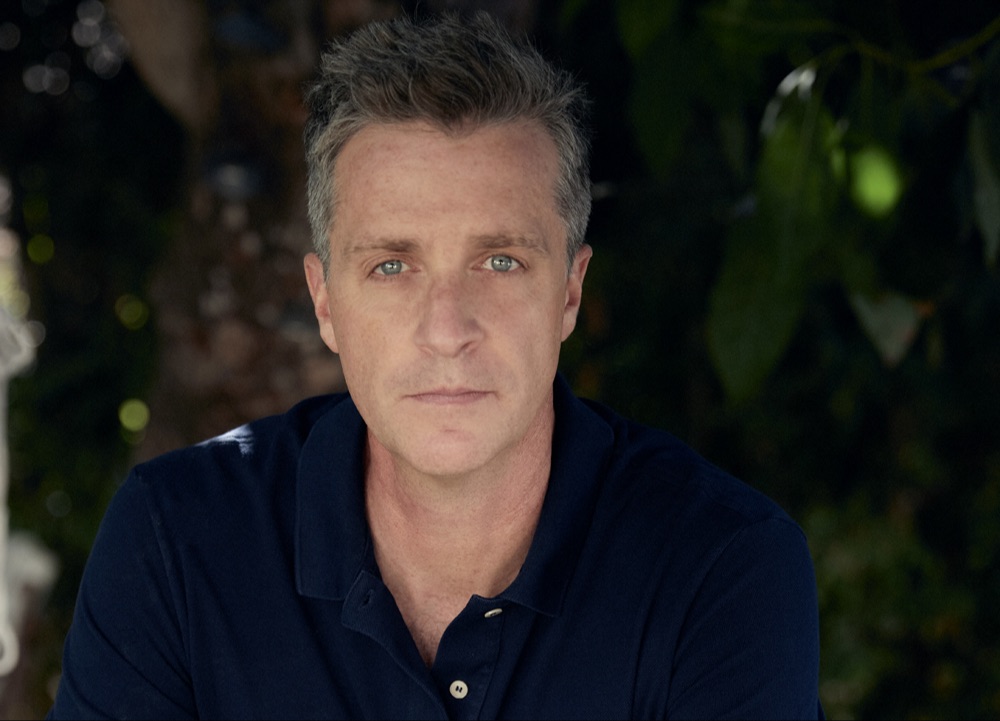
DAVID SHIELDS is the internationally bestselling author of twenty-five books, including Reality Hunger (which, in 2020, Lit Hub named one of the most important books of the past decade), The Thing About Life Is That One Day You’ll Be Dead (New York Times bestseller), Black Planet: Facing Race During an NBA Season (finalist for the National Book Critics Circle Award and PEN USA Award), Remote: Reflections on Life in the Shadow of Celebrity (PEN/Revson Award), and Other People: Takes & Mistakes (NYTBR Editors’ Choice). The Very Last Interview was published by New York Review Books in 2022.
The recipient of a Guggenheim fellowship and two NEA fellowships, Shields—a senior contributing editor of Conjunctions—has published essays and stories in the New York Times Magazine, Harper’s, Esquire, Yale Review, Salon, Slate, Tin House, A Public Space, McSweeney’s, Believer, Huffington Post, Los Angeles Review of Books, and Best American Essays.
His work has been translated into two dozen languages.

What's Included in
How to Write Literary Collage...

MODULE 1
What is Literary Collage?
This module lays the foundation by defining what literary collage is—and what it isn’t. You’ll explore how collage uses fragmentation, juxtaposition, and pattern to generate meaning and emotional power. A clear and powerful primer why collage is one of today’s most dynamic literary forms.
You’ll learn how to:
- Identify the essential elements that distinguish collage from other forms
- Understand why fragmentation creates momentum and resonance
- Recognize the artistic possibilities (and responsibilities) inherent in the form

MODULE 2
The Lineage of Collage Writing
Shields walks you through the tradition of collage writing, exploring key works and authors who shaped the form. Through examples from Annie Ernaux, Maggie Nelson, and other innovators, you’ll see how collage can illuminate memory, identity, culture, and consciousness.
You’ll learn how to:
- Study masterworks of collage to see the form’s evolution
- Analyze how different authors use fragmentation for thematic and emotional impact
- Draw inspiration and craft techniques from influential artists in the lineage

MODULE 3
Gathering the Material
Collage begins with material—your thoughts, memories, observations, research, quotations, documents, and more. In this module, you’ll learn how to gather, curate, and refine the fragments that will become the raw substance of your piece.
You’ll learn how to:
- Collect diverse fragments from your life, reading, and imagination
- Determine what belongs—and what doesn’t—in your collage
- Organize and catalog material so it’s usable and generative

MODULE 4
Building the Architecture
How do you give shape to a work built from fragments? This module teaches you how to discover (or impose) structure, exploring patterns of repetition, contrast, association, and silence. You’ll walk away with practical strategies for shaping material into something cohesive and compelling.
You’ll learn how to:
- Experiment with sequencing, pacing, and structural logic
- Use juxtaposition to create tension, revelation, and meaning
- Build an intuitive or explicit blueprint that guides the work’s evolution

MODULE 5
Voice, Tone, and the Self
Collage is often intensely personal—but the self can be expressed in countless ways. In this module, Shields explores how voice emerges through selection, arrangement, rhythm, and attitude rather than straightforward narration.
You’ll learn how to:
- Develop a unified voice from fragmented materials
- Shape tone through diction, rhythm, and emotional modulation
- Craft a presence on the page that feels authentic, layered, and alive
MODULE 6
Collage as Argument and Discovery
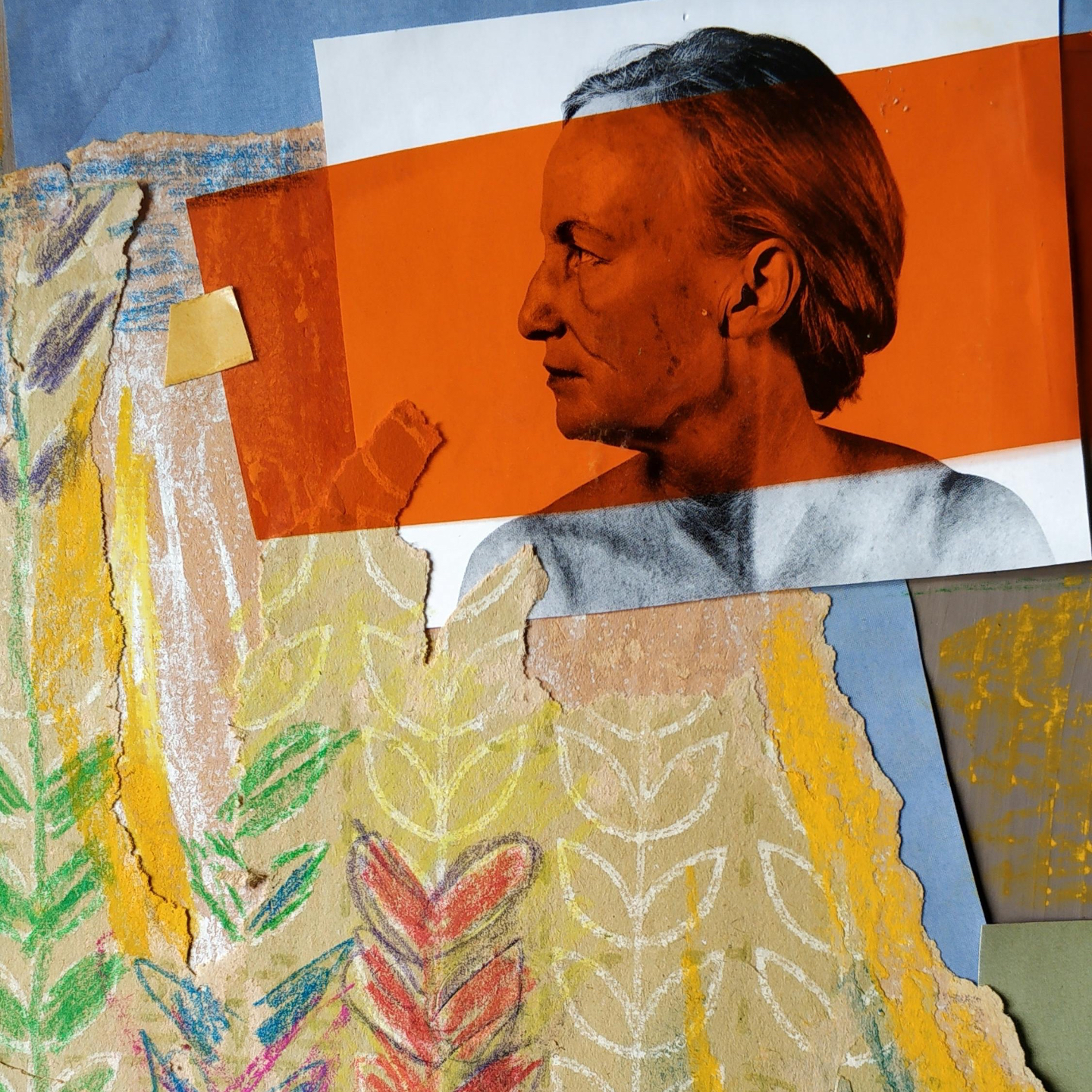
A collage can persuade, provoke, question, or illuminate—not through linear exposition, but through echo and contrast. This module reveals how collage can generate argument organically and how meaning often emerges through the process itself.
You’ll learn how to:
- Use juxtaposition to build implicit argument or critique
- Discover new insights by letting fragments interact and collide
- Transform personal or cultural material into a broader statement
MODULE 7
Revision and Refinement
Collage often comes alive in revision. This module shows you how to refine structure, sharpen language, cut ruthlessly, and clarify the emotional or intellectual throughline. You’ll learn how to polish a collage until it feels inevitable.
You’ll learn how to:
- Identify weak fragments—and strengthen or remove them
- Tighten structure for clarity and impact
- Use revision to deepen resonance, cohesion, and thematic unity
MODULE 8
Publication and the Road Ahead
To close the course, Shields demystifies the publication landscape for experimental and hybrid work. You’ll learn where collage thrives, how to position your work for editors, and what it means to continue developing in this form.
You’ll learn how to:
- Identify journals, presses, and venues that publish collage
- Prepare and submit your work with confidence
- Continue building a long-term creative practice in this form
FOUNDER & HOST
Brad Listi
Welcome! I'm the founder of DeepDive and the host of How to Write a Novel. I'm also the author of the novels Be Brief and Tell Them Everything and Attention. Deficit. Disorder., an LA Times bestseller.
Since 2011, I've hosted and produced the Otherppl podcast, which features in-depth interviews with today's leading writers. Past guests include luminaries like Karl Ove Knausgaard, Lorrie Moore, George Saunders, Min Jin Lee, Elizabeth Strout, Roxane Gay, Jonathan Franzen, Louise Erdrich, Dave Eggers, and many more.
Through these conversations—and through my own years of experience as a working writer, editor, and publisher—I’ve come to understand the writing process intimately: the struggles it involves, the doubts it stirs up, and the mindset and tools it takes to persevere and publish.

Why this course different...
- Taught by the leading voice in the field. David Shields is not just a practitioner—he’s one of the most influential innovators of collage writing alive today, with decades of experience shaping the genre.
- A complete, start-to-finish roadmap. Most collage resources offer scattered theory or isolated prompts; this course gives you a clear, cohesive, step-by-step framework—from gathering material to publication.
- Real-world examples from masterworks. Instead of abstract craft talk, Shields uses vivid, concrete examples from Ernaux, Nelson, and other groundbreaking authors to show you exactly how the form works.
- Practical tools you can apply immediately. Every module includes actionable techniques for structure, voice, argument, revision, and more—turning inspiration into tangible progress.
- Designed for all levels of writers. Whether you’re entirely new to collage or have been experimenting for years, the course adapts to your skill level and provides insights you won’t find anywhere else.
GET STARTED TODAY!
How to Write Literary Collage
Bundle & Save: Get Both Courses Together
-
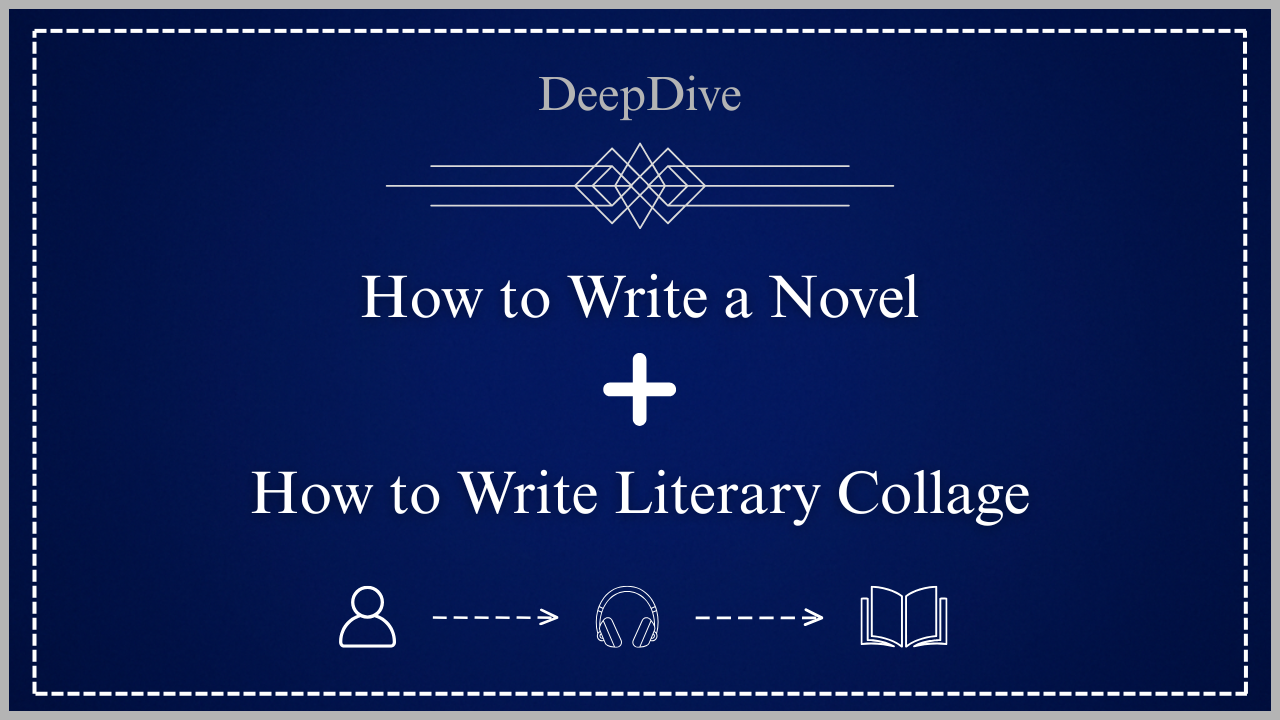
How to Write a Novel: $397
-
How to Write Literary Collage: $147
-
Both Courses Together: $444 — Save $100
Upgrade your order and get How to Write Literary Collage and our flagship course, How to Write a Novel.
That’s more than 60 hours of expert, in-depth instruction on every stage of the writing process — from crafting literary collage with David Shields to building, drafting, and finishing your novel with guidance from 40+ acclaimed authors.
Two courses. One transformative journey. One unbeatable value.
ENROLL IN THE BUNDLE & SAVEBundle & Save: Get 3 Courses Together
- How to Write Literary Collage: $147
- How to Get the Reader Onboard: $147
-
How to Write Autobiographical Fiction: $197
-
All 3 Courses Together: $390 — Save $100
Upgrade your order and get How to Write Literary Collage, How to Get the Reader Onboard, and How to Write Autobiographical Fiction at a special sale price.
That’s more than 20 hours of expert instruction featuring acclaimed authors David Shields, Steve Almond, and Hannah Pittard — three award-winning authors guiding you through the emotional and technical heart of storytelling.
Master the art of captivating readers — and turning life into cutting-edge literature — in one unbeatable bundle.
ENROLL IN THE BUNDLE & SAVE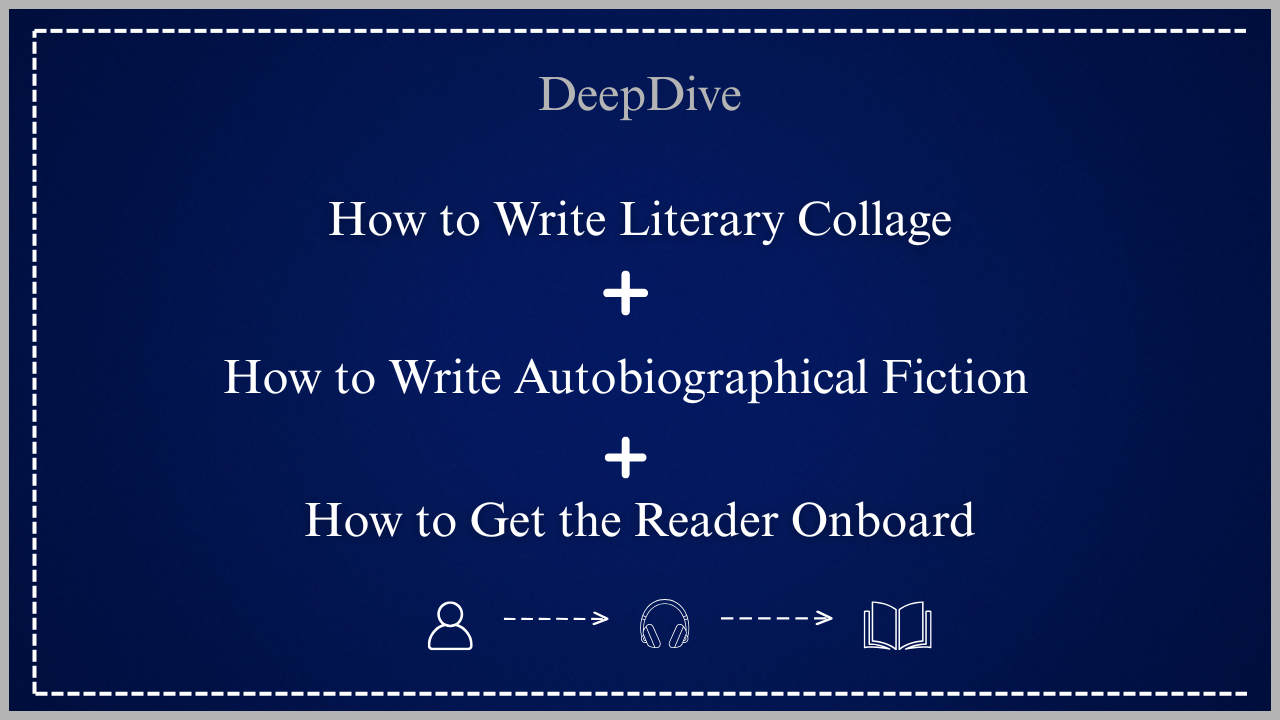
The DeepDive Mega-Bundle:
All Courses, One Price
-
How to Write a Novel: $397
-
How to Write Autobiographical Fiction: $197
-
How to Get the Reader Onboard: $147
-
How to Write Literary Collage: $147
-
All Courses Together: $688 — Save $200
Unlock the complete DeepDive collection and gain access to over 80 hours of expert-led instruction featuring more than 40 acclaimed authors and teachers.
You’ll learn everything from crafting irresistible openings with Steve Almond; to assembling powerful literary collage with David Shields; to transforming lived experience into art with Hannah Pittard; to building, drafting, and finishing your novel with some of today’s most celebrated writers.
Four courses. Expert instruction. One transformative learning experience.
ENROLL IN THE BUNDLE & SAVE
Frequently Asked Questions
What is How to Write Literary Collage?
Who is the instructor?
How do I listen to the course?
Who is this course for?
What makes How to Write Literary Collage different from other writing courses?
What makes this course different from reading a book about collage writing?
How long will I have access to the course?
Do I need to listen in a specific order?
I loved this course and want more! What other courses do you offer?
What is your refund policy?
I need to contact Customer Support.
Successful writers take action.
Every writer dreams of creating work that feels original, alive, and true — but the ones who succeed don’t wait for the perfect idea or the perfect moment. They study the craft, learn from the masters, and build the discipline to shape raw material into art. How to Write Literary Collage gives you the insight, structure, and practical tools you need to finally bring your fragmented ideas together into a work with coherence, authority, and emotional force.
Don’t let your project linger in notebooks, files, or half-formed notes. Invest in your growth, learn directly from one of today’s most influential thinkers on the collage form, and take the next step toward creating the book only you can write.
GET STARTED NOW